

Comb Honey: Understanding Honey in Its Most Natural Form
Comb honey is one of the purest and most natural forms of honey available. Unlike conventional liquid honey, which is extracted from the honeycomb before packaging, comb honey is harvested with the original beeswax comb intact. The mature honey remains sealed inside the hexagonal wax cells naturally built by honeybees, preserving the product almost exactly as it exists inside the hive.
Because both the honey and the honeycomb structure are retained, comb honey offers consumers a unique opportunity to experience honey in a form that closely reflects its natural state. For many honey enthusiasts, it represents not only a food product but also a remarkable example of nature's engineering and the complex work of a honeybee colony.

How Bees Produce Comb Honey
The production of comb honey begins when worker bees collect nectar from flowering plants. The nectar is carried back to the hive, where it undergoes a series of natural transformations. Through repeated processing by the bees and continuous evaporation of moisture, the nectar gradually develops into mature honey.
Once the honey reaches an appropriate moisture level and becomes stable for long-term storage, bees seal each cell with a thin layer of beeswax, a process commonly referred to as "capping." Fully capped honeycomb is widely regarded by beekeepers as an indication that the honey has completed its natural maturation process within the hive.
This natural maturation is one reason why comb honey is highly valued. The honey remains untouched by extraction equipment and continues to be protected inside the wax cells created by the bees themselves.
The Unique Structure of Honeycomb
One of the most fascinating features of comb honey is its honeycomb structure. Honeybees construct thousands of interconnected hexagonal cells using beeswax produced by their own bodies.
The hexagonal design is not accidental. It allows bees to maximize storage capacity while using the least amount of wax possible, making it one of the most efficient structures found in nature. Each cell serves as a miniature storage chamber, safely preserving honey until it is needed by the colony.
When consumers purchase comb honey, they are receiving both the honey and the remarkable natural architecture that protects it.
Flavor, Texture, and Sensory Experience
The eating experience of comb honey differs significantly from that of liquid honey.
The honey itself delivers natural sweetness, floral aromas, and a smooth, rich texture that varies according to the nectar source. Depending on whether the honey originates from acacia, linden, multifloral blossoms, or other floral sources, the color and flavor profile may range from light and delicate to dark and robust.
At the same time, the natural beeswax comb contributes a soft, mildly chewy texture. As the honey is released from the wax cells during chewing, consumers experience a combination of liquid honey and natural beeswax that creates a distinctive mouthfeel rarely found in other sweeteners.
This combination of flavor, aroma, texture, and visual appeal is one of the reasons comb honey is often considered a premium bee product.
Nutritional and Consumer Appeal
Comb honey appeals to consumers who appreciate minimally processed and naturally presented foods. Because the honey remains inside the original comb, many consumers view it as a product that maintains a closer connection to its source.
In addition to its visual beauty, comb honey is often chosen by consumers seeking:
Natural and minimally processed foods
Premium honey products
Gourmet breakfast and dessert ingredients
Unique gift items
Authentic beekeeping products
Popular Ways to Enjoy Comb Honey
Comb honey is highly versatile and can be enjoyed in numerous culinary applications.
Common serving suggestions include:
· Eating small pieces directly from the comb
· Pairing with toast, bread, and crackers
· Serving alongside cheese boards
· Adding to yogurt and oatmeal
· Combining with fresh fruits and nuts
· Using as a premium dessert garnish
· Incorporating into luxury gift sets
Because of its attractive appearance and natural presentation, comb honey can elevate both the flavor and visual appeal of many food products.
Storage and Handling Recommendations
Proper storage is essential to preserve the quality and appearance of comb honey.
For best results:
· Store in a cool, dry location.
· Keep away from direct sunlight and heat sources.
· Avoid excessive humidity.
· Protect the honeycomb from physical pressure that may damage the delicate wax structure.
· Keep containers tightly sealed after opening.
Since the honeycomb cells are naturally fragile, careful handling during transportation and storage helps prevent breakage and honey leakage.
When stored properly, comb honey can maintain its quality and natural characteristics for an extended period.
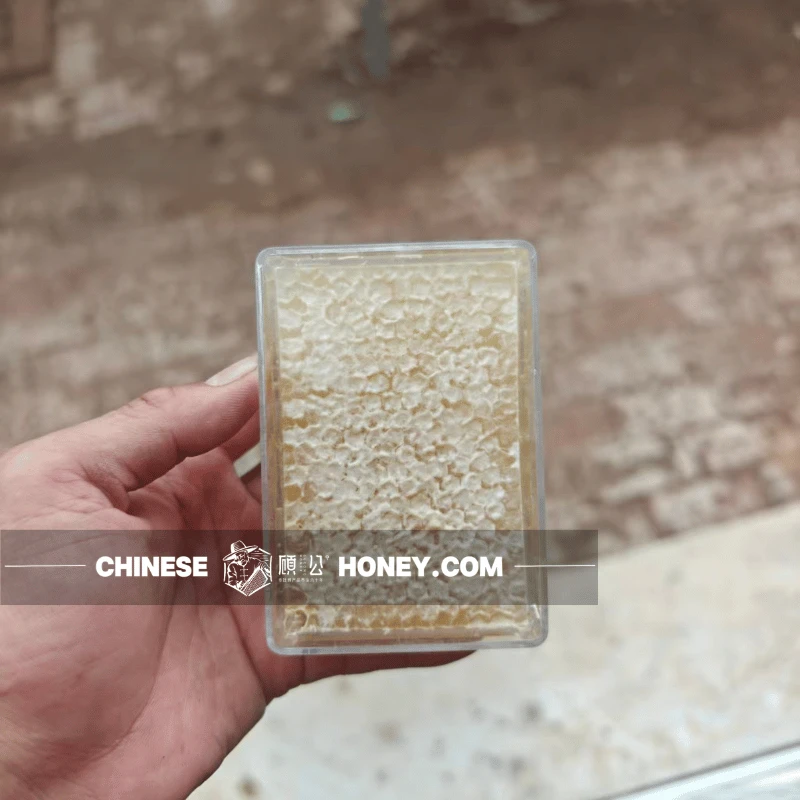
Why Comb Honey Remains a Premium Bee Product
Among the many honey products available today, comb honey occupies a unique position. It offers consumers more than just honey-it provides a complete natural experience that includes both the honey and the structure created by the bees.
Every piece of comb honey reflects thousands of foraging trips, countless flowers visited by honeybees, and the extraordinary engineering of the hive itself. Its intact wax cells, concentrated mature honey, rich floral aromas, and distinctive texture combine to create a product that remains remarkably close to its original form in nature.
For consumers who appreciate authenticity, craftsmanship, and natural food products, comb honey represents one of the most fascinating and enjoyable ways to experience honey exactly as the bees intended.


