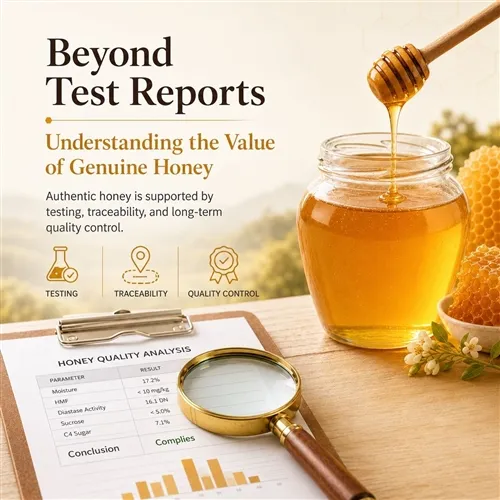
Beyond Test Reports: Understanding the Value of Genuine Honey
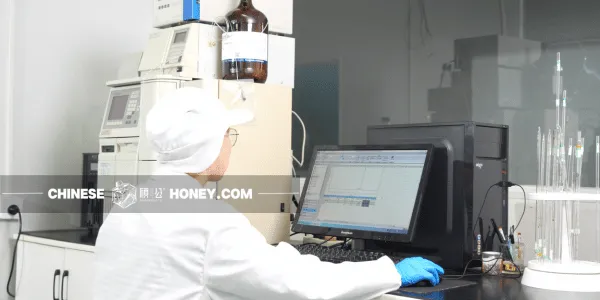
- In honey sourcing and international trade, test reports are an essential reference for quality evaluation. Parameters such as moisture, fructose and glucose content, sucrose, HMF, diastase activity, antibiotic residues, pesticide residues, and heavy metals help buyers understand the physicochemical quality and food safety status of honey. For professional honey trade, laboratory testing is not only necessary, but also an important way to communicate quality with transparency.

- At the same time, honey is a natural agricultural product, and its true value cannot be fully represented by a single test report. A report can show that the submitted sample meets specific testing requirements, but it cannot fully present the complete management process from apiary, harvesting, purchasing, storage, processing, to export. Truly reliable honey quality is supported by testing data, stable beekeeping sources, batch traceability, production management, and long-term quality control.

- Honey quality is influenced by many natural factors, including floral source, geographic origin, climate conditions, harvesting season, and storage methods. Honeys from different floral sources may vary in color, aroma, taste, sugar composition, and mineral content. This is also what makes honey unique as a natural food. It is not simply a sweetener, but a product shaped by nature, bees, and careful human management.
For companies that insist on producing genuine honey, there are also real challenges. Stable beekeeping sources require long-term cooperation and management. Mature honey harvesting takes time. Raw material selection, testing, warehousing, traceability, and quality control all require continuous investment. Compared with focusing only on a few indicators, companies that truly maintain natural honey quality often face higher time costs, management costs, and quality-control responsibilities.
Therefore, test reports should not be dismissed. They are an important part of honey quality management. However, it is also important to understand that a report is only one part of the quality system, not the whole picture. When evaluating whether a honey product is trustworthy, buyers should look not only at testing results, but also at whether the supplier has stable apiary sources, standardized raw material management, clear batch records, a reliable traceability system, and consistent long-term quality performance.
- The value of genuine honey is not only about meeting test standards. It also lies in its natural origin, supply chain transparency, and the company's continuous commitment to quality. For buyers and consumers, understanding this helps build a more complete view of genuine honey and allows them to recognize the long-term effort made by companies that remain committed to authenticity and quality.